Risk
Break even stop: what it saves and what it costs
Moving the stop to entry takes the loss off the table. It also ends trades that were about to work. Here is our own data on both.
A break even stop loss is when you move your stop to the price you entered at. From
that moment the trade cannot lose. It is the single most reassuring thing you can do to
an open position, and it is also the reason a lot of good trades end at zero.
What it actually does
Two things happen at once when the stop goes to entry. The loss comes off the table,
which is real and worth something. And the trade now needs price to never come back to
your entry, not once, for the rest of its life. On gold, price comes back to your entry
constantly. That is what gold does.
Our own numbers
We publish every closed trade, so we can measure this rather than guess. Across our
record, roughly one trade in five closes at break even rather than at a target or a
loss. Those trades reached a profit, some of them a large one, and then came back
through the entry.
The gap on our results page between pips reached and pips
banked is mostly this. Price went there. We did not hold all of it. That gap is the
price of never taking a full loss on those trades, and we show both numbers rather than
only the flattering one.
Break even vs stop loss
| Original stop | Break even stop | |
|---|---|---|
| Worst case | A full loss | Zero |
| Room to breathe | Full | None |
| Ends on a normal pullback | Rarely | Often |
| Ends on a wick | Sometimes | Very often |
| Best for | A level with room behind it | A runner you already banked from |
What we changed, and why
We used to move the stop to entry as soon as the trade was in profit at all. That
took losses off the table and it also killed trades on the first small pullback,
sometimes on a single wick.
Now two things happen instead. A partial comes out early, so the trade has already
paid something before anything is protected. And the stop only moves to entry once the
trade is 15 pips in profit, not the moment it turns green. Under that
distance a pullback is normal noise, not a signal.
The result is fewer trades ending at exactly zero, and the ones that do end there
have already banked a partial on the way. That is a different outcome from a flat zero
even though the record shows the same word.
When not to use one
- Right after entry. Price is still inside the noise of the level you
entered from. A break even stop here is a coin flip against you. - Before a news release. The spread alone can reach your entry
without price ever getting there. - When your stop already sits behind a level. If the level holding
is the whole idea, moving the stop in front of it throws away the reason you took the
trade.
Free download
Gold Levels Cheat Sheet (PDF)
Order blocks, fair value gaps, PDH and PDL, and the session times in nine countries. Two pages, no email needed.
See break even stop loss on the live chart
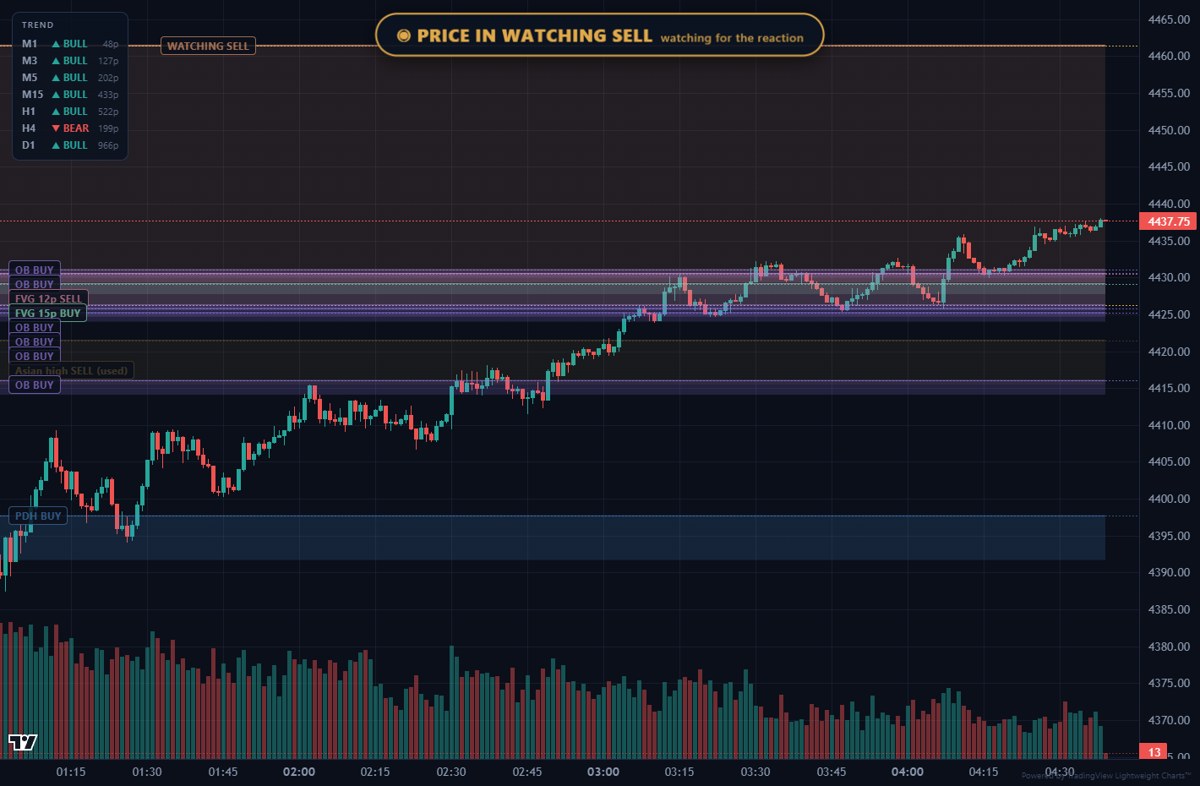
We run a live chart through every session with the levels marked on it, the zones shaded, and every order block and fair value gap labelled as it forms. Watch the live chart.
Every trade we close is published in pips on the results page, wins and losses both, with the date it closed and how far it ran. What your spread and commission take out of that is on the cost calculator.
Related: gold pip value · lot size calculator · break even stop · smart money concepts · trading hours · order block · fair value gap · PDH and PDL
Education only, not financial advice. Trading gold carries a high level of risk and past results do not predict future results.